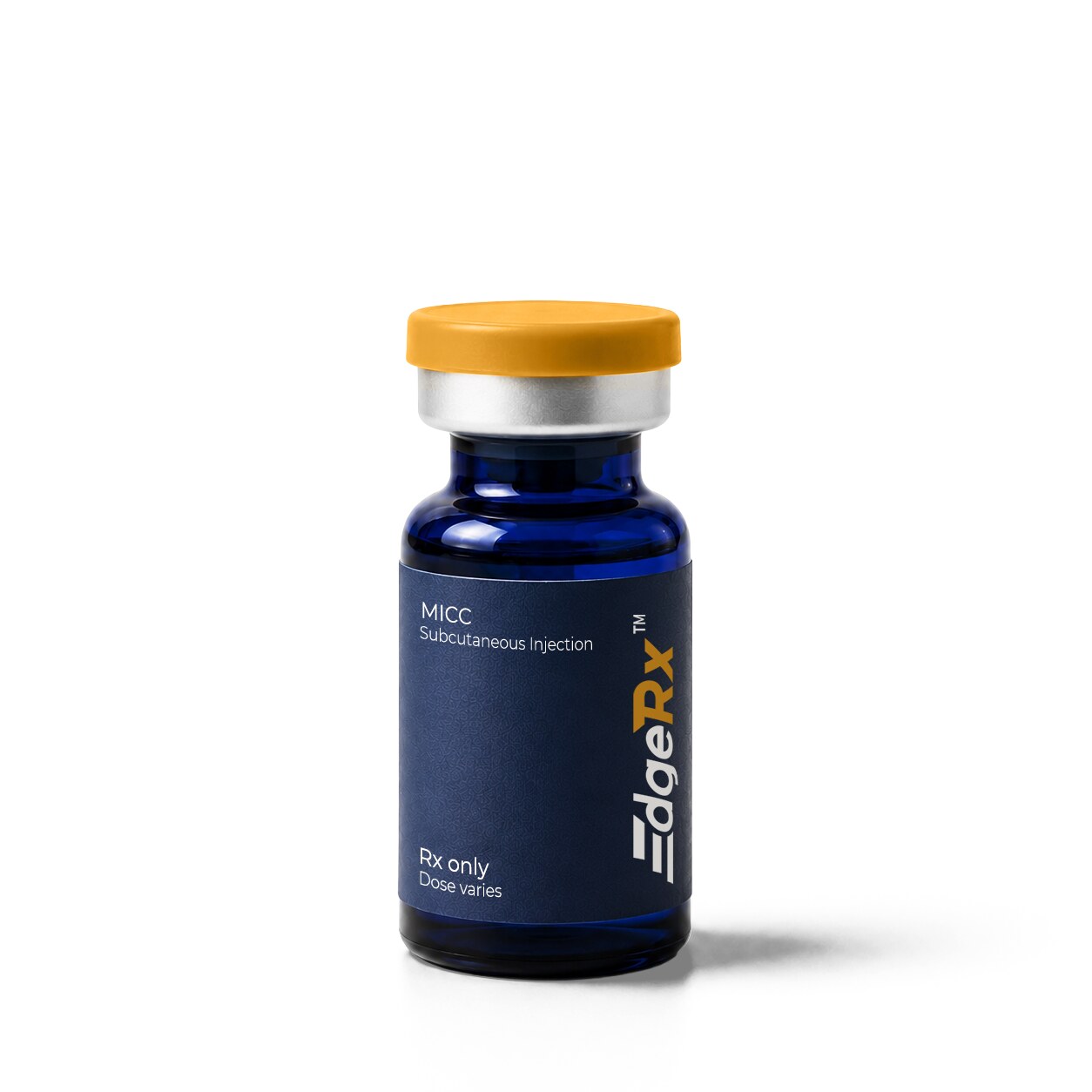
10 mL vial · ~2-month supply
MICC Lipotropic Injection
For the men already putting in the work — who want metabolic and energy support without starting a GLP-1.
- Lipotropic nutrient support for fat metabolism
- B12 for energy and metabolic rate
- A simple weekly injection — no titration
Standard price $49/mo
Next: brief medical assessment, then physician review. Usually within 24 hours.
Questions? Call us at (908) 516-EDGE.

US board-certified physician review
A board-certified physician builds your protocol.
US-licensed 503B facility
Pharmaceutical-grade purity, prescribed by your physician.
Shipped discreetly to your door
Subscription billed monthly. Cancel anytime.
How MICC works
MICC is a lipotropic injection — methionine, inositol, and choline, the nutrients involved in how the body processes fat, combined with vitamin B12 for energy.
MICC is a lipotropic injection: a combination of three nutrients that support the body's metabolism of fat, plus vitamin B12. The three lipotropic compounds are methionine, an essential amino acid; inositol; and choline, an essential nutrient. Each plays a role in how the liver processes and clears fat. The name is the four components — methionine, inositol, choline, and cyanocobalamin, the form of vitamin B12 used in the formula.
Methionine and choline act as methyl donors — they supply the methyl groups the body uses in core metabolic reactions, including the breakdown of fat stores and the movement of fat out of the liver. Choline in particular helps transport lipids out of liver cells rather than letting them accumulate, and inositol works alongside it in regulating lipid metabolism. Vitamin B12 supports energy production and metabolic rate, part of how the body uses stored fat as fuel. MICC is not a hormone, not a GLP-1, and not a stimulant — it works by supplying nutrients the body's own metabolic pathways rely on.
Because MICC works through nutrient support rather than appetite signaling, it does not reduce hunger the way a GLP-1 protocol does. It is a metabolic and energy protocol, most useful for men who are already managing their diet and training and want support for fat metabolism and energy — or who want a metabolic protocol without starting a GLP-1. Your physician determines whether MICC fits your goals, on its own or as one part of a broader plan.
Why MICC
Lipotropic injections — methionine, inositol, and choline, often with added B12 — are a long-standing fixture of med-spas and walk-in wellness clinics, usually sold as 'fat-burner shots' with little explanation of what the nutrients do or whether they suit the person getting them. The compound itself is well understood and low-risk. What is usually missing is the physician.
EdgeRx offers MICC for what it is: a lipotropic and B12 injection that supports fat metabolism and energy, prescribed by a US board-certified physician who reviews your history first. It is not a GLP-1, and not a replacement for diet and training — it is a clinical metabolic protocol, described plainly and priced to match.
What to expect
MICC is not titrated — your physician sets a fixed dose and schedule from the start. Some men notice the B12-driven lift in energy within the first few weeks. The support MICC provides for fat metabolism is gradual and works alongside your own diet and training, not on its own. Like the other metabolic protocols, it is run as ongoing support rather than a short course.
- Nutrient support for how your body metabolizes fat
- A B12-driven lift in energy and metabolic rate
- A fixed-dose protocol — no titration schedule to manage
- A metabolic protocol that works alongside your diet and training
What MICC supports
Lipid metabolism
Methionine, inositol, and choline are the lipotropic nutrients MICC is named for. They are involved in how the liver processes fat — supporting the breakdown of fat stores and their transport rather than their accumulation.
Energy support
Vitamin B12 supports energy production and metabolic rate, part of how the body uses stored fat as fuel. Low B12 is a common and correctable contributor to fatigue, and a physician can evaluate it directly.
Methyl donor support
Methionine and choline act as methyl donors, supplying the methyl groups the body uses in core metabolic and liver reactions. It is the biochemical role behind the lipotropic effect — the reason these nutrients are grouped together.
Appetite and mood
Inositol plays a role in the neurochemical pathways involved in mood and appetite. This is a smaller part of MICC's profile than its role in lipid metabolism, but one a physician may weigh alongside your goals.
How you take it
The routine
A 1 mL injection given once or twice weekly, as your physician directs. It is given subcutaneously — just under the skin — with a small needle. MICC ships as a ready-to-use solution: no mixing and no reconstitution. You inject on the same day or days each week.
Starting dose
Your physician sets your dose and weekly schedule from your medical history — most men are directed to inject once or twice a week. MICC is not titrated: there is no step-up schedule and the formulation is fixed. Your physician reviews your goals, and your B12 status where relevant, to decide whether once- or twice-weekly is the right starting point.
Storage
Store at room temperature; refrigeration is not required.
Schedule
MICC is run as ongoing metabolic and energy support, not a short course. Your physician revisits the schedule at your check-ins and adjusts the frequency based on how you respond. There is no fixed end date; the schedule is a clinical decision your physician makes with you.
Questions
Start the MICC protocol.
Brief medical assessment. US board-certified physician review. Shipped from an FDA-registered 503B facility.
See If You QualifyMICC Lipotropic Injection is a compounded medication prepared by an FDA-registered 503B outsourcing facility under cGMP quality standards. Compounded medications are not FDA-approved as finished products. A prescription is determined by a US board-certified physician after a brief medical assessment, and not all patients are eligible. MICC is not a GLP-1 medication. It should not be used by anyone with a known allergy to any of its components, and men with significant liver or kidney conditions, or who are pregnant or breastfeeding, require physician evaluation first. Your physician reviews your full medical history before prescribing.